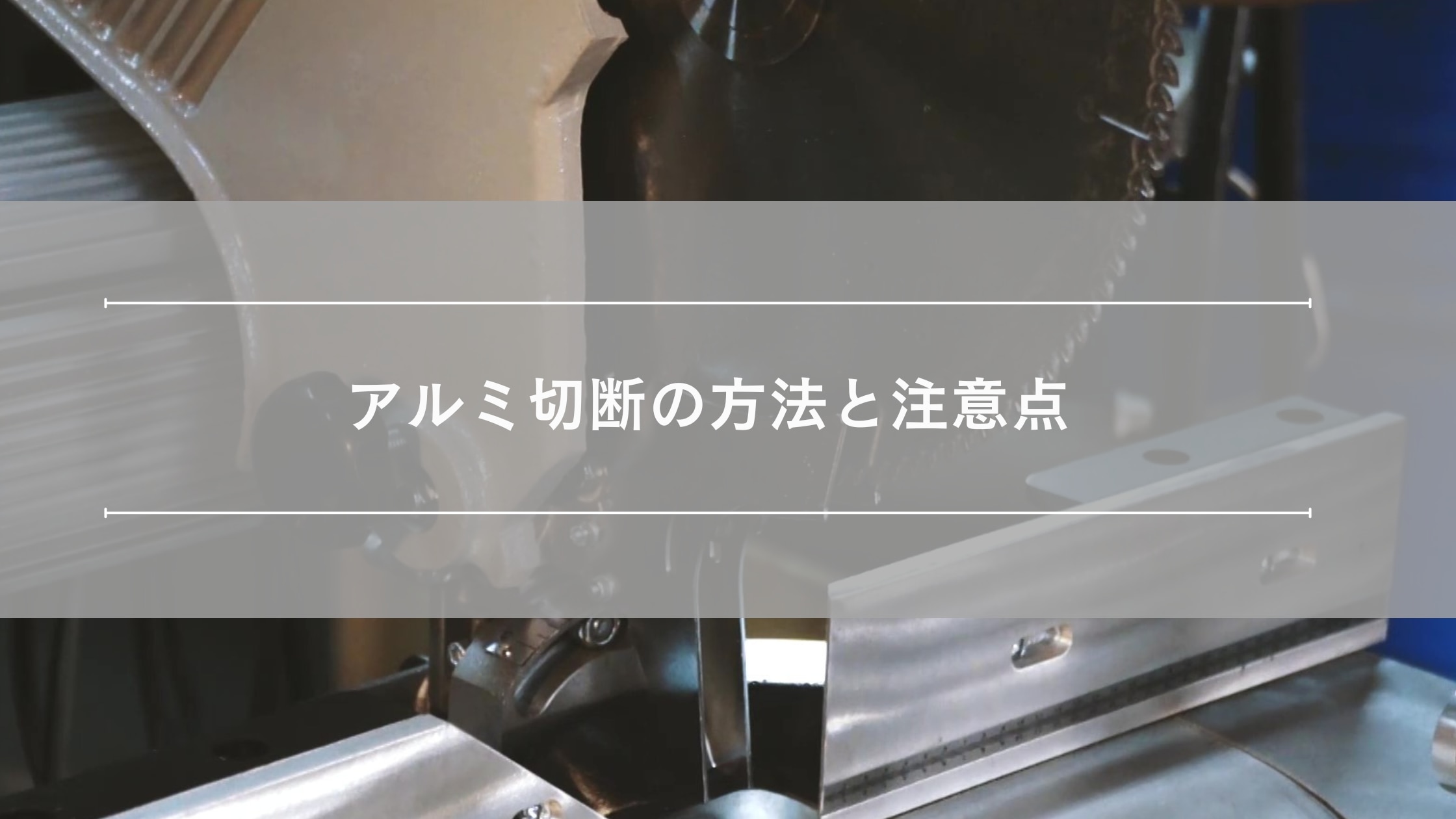
Methods and precautions for stabilizing the quality of aluminum cutting | Tips for choosing and operating machinery
Table of contents [hidden]
- 1.Features and cutting methods of aluminum cutting machines
- 1.1.High-speed circular saw cutting machine (tipped saw blade cutting machine)
- 1.2.Bandsaw cutting Machine
- 2.Main points to note when cutting aluminum
- 2.1.Properties specific to aluminum
- 2.2.Effects of cutting tools and blades (cutters)
- 2.3.Insufficient machine rigidity and inappropriate Cutting parameter
- 3.Criteria for selecting an aluminum cutting machine and tips for its operation
- 3.1.Machine rigidity and method of securing materials
- 3.2.feed method that affects cutting accuracy
- 3.3.Rotation speed control function to accommodate various materials
- 3.4.Safety and maintainability to reduce the burden on the site.
- 4.Frequently Asked Questions
- 4.1.How often should the blade be resharpening?
- 4.2.What is the cost of introducing cutting machine?
- 4.3.Is it possible to achieve high-quality cutting using DIY tools (aluminum cutters)?
- 5.Summary_
Features and cutting methods of aluminum cutting machines
The quality and efficiency of aluminum cutting depend greatly on cutting machine used.
The optimal machine will vary depending on the shape (aluminum plate, aluminum square bar, aluminum frame, aluminum pipe, etc.), thickness, required precision, and production volume.
This section explains the mechanisms, processing strengths, advantages, and disadvantages of typical aluminum cutting machines widely used in factories.
- High-speed circular saw cutting machine (tipped saw blade cutting machine)
- Bandsaw cutting machine
High-speed circular saw cutting machine (tipped saw blade cutting machine)
A high-speed circular saw (tipped saw blade saw cutting machine) is a machine that cutting materials by rotating a disc-shaped blade (tipped saw blade cutting) with a carbide tip at high speed.
01 | Features and Benefits |
- It allows for fast cutting speeds and produces a clean cutting surface (finished surface) with minimal burr formation.
- This significantly reduces the effort required for secondary processing such as deburring and chamfering after cutting.
- It exhibits high precision in right-angle and angle cutting of extruded profiles such as aluminum sashes and frames.
02 | Challenges and disadvantages |
- High-speed rotation can sometimes lead to problems such as noise and scattering of metal chips.
03 | cutting method |
① Check the direction of rotation and attach tipped saw blade to cutting machine, making sure not to get the direction wrong.
② Securely fasten the product to be cutting so that it does not move.
③ Turn on the switch, confirm that tipped saw blade is rotating at full speed, and start cutting.
Bandsaw cutting machine
A band cutting is a machine that cutting materials by rotating a band-shaped saw blade.
01 | Features and Benefits |
- They specialize in cutting thick, solid wood and large blocks of material.
- It also supports "bundling", which is a bundle of multiple ingredients to cutting.
- Compared to tipped saw blade, it produces less material (less material is removed during cutting), resulting in a better material yield.
02 | Challenges and disadvantages |
- cutting slower than tipped saw blade.
- Because cutting surface is rough, a finishing process is necessary if high precision is required.
03 | cutting method |
① Check the direction of the band saw blade and attach it with the correct tension.
② Securely fasten the product to be cutting so that it does not move.
③ Ensure the band saw is not in contact with the product to be cutting, then switch it on and slowly apply pressure to cutting.
Main points to note when cutting aluminum
Aluminum is often perceived as an "easy-to-process metal," but in reality, its properties can sometimes lead to specific problems during cutting. Issues such as burr formation, rough cutting surfaces, and reduced dimensional accuracy can decrease work efficiency and compromise product quality.
Here, we will explain the points to be aware of when cutting aluminum from the following three perspectives.
- Properties unique to aluminum
- The effect of cutting tools and blades (cutters)
- Insufficient machine rigidity and inappropriate Cutting parameter
Properties unique to aluminum
High thermal conductivity
Aluminum has a low melting point and high thermal conductivity, making it easy to side-welding to the cutting edge with frictional heat at cutting times.
When aluminum sticks to the blade, it noticeably loses its sharpness, which is a direct cause of rough cutting surfaces and large burrs. This phenomenon is also called "composition cutting edge".
Soft and highly ductile
Aluminum is a softer and more ductile (tenacious) metal than steel.
Therefore, if you try to cutting process aluminum with a poor sharpness saw blade, it will be torn off instead of cut, and it is easy to cause plucking and deformation. This tendency is especially noticeable when processing thin sheets such as aluminum plates.
Understanding these characteristics andusing cutting fluids to prevent side-welding, as well asselecting saw blade specifically designed for aluminum,is extremely important.
The effect of cutting tools and blades (cutters)
If you continue to use iron blades or worn blades on aluminum cutting, problems such as side-welding and scratching will occur.
Aluminum blades are optimized for characteristics such as the shape of the cutting edge, such as the rake angle and escape angle that are difficult to side-welding, and the number of teeth to produce fine chips. The wear condition of the blade is also directly related to quality. Worn blades increase cutting forces, leading to increased burrs, burning of cutting surfaces, and even excessive strain on the machine body. This can lead to motor failure and reduced machine accuracy.
To ensure consistent cutting quality and blade life for aluminum, it isessential to select aluminum cutting blades that are suitable for the material and shape of the aluminum being processed, rather than using general-purpose blades, and to replace or resharpening at the appropriate time.
Insufficient machine rigidity and inappropriate Cutting parameter
Insufficient rigidity of the machine
Even with high-quality specialized blades, if the machine itself lacks sufficient rigidity, you won't be able to achieve the desired cutting quality.
"Rigidity" refers to the strength that prevents deformation when subjected to forces during processing.
In machines with low rigidity, the material holding parts may vibrate and deform slightly depending on cutting load, resulting in streaky patterns on cutting surface or unstable dimensional accuracy.
Inappropriate Cutting parameter
If the feed speed of the material is too slow relative to the speed of the blade, the blade will spend too much time grinding the material, increasing frictional heat and favoring the side-welding of aluminum. Conversely, too high a feed speed can cause more impact on the blade, leading to chipping and reduced life, as well as rough cutting surfaces.
Criteria for choosing an aluminum cutting machine and tips for its operation.
To stabilize the quality of aluminum cutting and reduce the burden of the finishing process, the most effective approach is to introduce cutting machine that is best suited to your company's specific processing needs.
However, if you select a product based solely on price and specifications, you may end up in a situation where you implement it but don't get the expected results.
To avoid making mistakes in capital investment, we will explain the selection criteria for cutting machines and how to operate them to maximize their performance after installation from the following four perspectives.
- Machine rigidity and material fastening methods
- feed method that affects cutting accuracy
- Rotation speed control compatible with various materials
- Safety and maintainability that reduce the burden on the site.
Machine rigidity and material fastening methods
A robust frame structure and heavy weightsuppress vibrations during cutting, allowing saw blade to cut straight into the material without wobbling. If possible, it's a good idea to listen to the operating sound of the actual machine or check the structural features with the manufacturer.
Just as important as rigidity is the performance of the clamp (vise) that securely holds the material in place. Even slight movement of the material during cutting can cause tilting of cutting surface, dimensional deviations, and increased burrs. Especially for complex shapes and thin materials, a mechanism that can firmly secure the material from all sides is essential, and it is important to communicate the shape and size of the material so that the optimal fixing method can be proposed.
feed method that affects cutting accuracy
Rotation speed control function that accommodates a variety of materials
Aluminum has different properties, ranging from wrought aluminum like A5052 to cast aluminum like ADC12, and optimal cutting requires adjusting the saw blade's rotation speed to match the material.
Soft materials can be cut at low speeds to prevent side-welding, while hard materials can cutting efficiently at the appropriate speed. With an inverter-controlled cutting machine that allows you to change the rotation speed, you can set the optimal conditions according to the material, thickness, and blade diameter, allowing for flexible handling of a wide variety of materials.
Safety and maintainability that reduce the burden on the site.
Even high-performance machinery is useless if it cannot be used safely and comfortably on site. Safety measures are especially important for cutting machines that handle high-speed rotating saw blade. Features such as a structure that completely covers the cutting area and an interlock function that automatically stops the machine when the cover is openedare essential to ensure the safety of the operator.
Regarding daily maintenance, factors such as the ease of blade replacement,the ease of chip removal and cleaning, and the clarity of lubrication pointsare important for maintaining the machine's operational efficiency.
FAQ
FAQ
Q.
How often should I resharpening my blades?
A.
The timing for replacing the blade varies depending on usage.
Please judge based on the sound during cutting, the amount of burrs produced, and the condition of cutting surface.
Continuing to use the item despite its condition may result in higher repair costs, so we recommend requesting resharpening a little earlier than necessary.
Q.
How much does it cost to install cutting machine?
A.
cutting machines start from around tens of thousands of yen.1,000They range from high-performance models costing over 10,000 yen to a wide variety of other models.
The optimal model varies greatly depending on the application, processing accuracy, and workload, so we recommend consulting with a specialist to select the appropriate cutting machine for your purpose.
Q.
Is it possible to achieve high-quality cutting using DIY tools (aluminum cutters)?
A.
While DIYtools are affordable, their simple construction and lack of sufficient rigidity make them unsuitable for high-precision cutting. Furthermore, since most are manually operated, maintaining a consistent cutting speed requires advanced skills. Therefore, even with the same tipped saw blade, it's difficult to achieve the same high-quality, long-lasting cutting performance as dedicated factory cutting machines.
summary
This article explains the following information about cutting (Aluminum Cutting) for aluminum.
- Features and cutting methods of aluminum cutting machines
- Precautions when cutting aluminum
- How to choose an aluminum cutting machine
- FAQ
If you're having trouble cutting aluminum, please feel free to contact us! We'll provide you with the best solution.
\Aluminum cutting machine catalog is available for free download!/
【author】

[Supervising Company]

Hashimoto Special Industries Co., Ltd.
Founded in 1953, this company is a specialized manufacturer tipped saw blade headquartered in Takamatsu City, Kagawa Prefecture. They manufacture, sell, and resharpening circular tipped saw blade for a wide range of materials, including wood, resin, non-ferrous metals, and steel. Their strength lies in custom-made production tailored to the customer's Cutting parameter, high rotational stability achieved through their unique tensioning process, and integrated service from manufacturing to resharpening and repair. They have a track record of supplying to diverse industries, including automotive parts and building materials.
For more details,Hashimoto Industries Co., Ltd. Official WebsitePlease take a look.