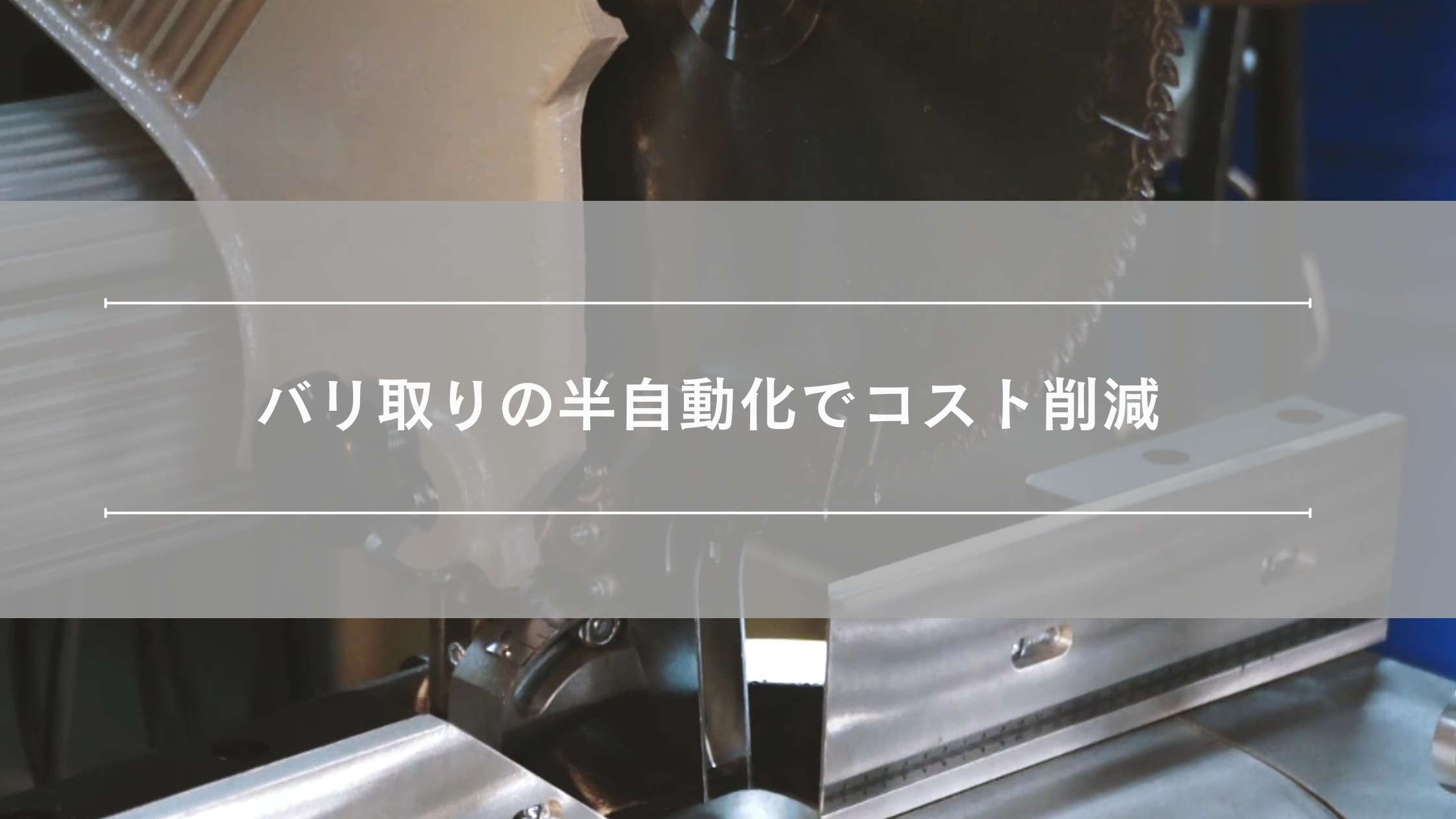
Semi-automation of deburring reduces costs: Comparison with manual methods and case studies.
In manufacturing, deburring is a crucial process that significantly impacts quality, yet it faces numerous challenges related to work time, labor costs, safety, and working environment. This article will explain in detail, with cost estimates, how "semi-automation" of deburring can solve these on-site challenges and lead to concrete cost reductions.
Table of contents [hidden]
- 1.What is deburring?
- 2.Tips and challenges of manual deburring
- 3.Estimated cost reduction through semi-automated deburring
- 3.1.Estimation of working hours and labor costs
- 3.2.Guidelines for Capital Investment Recovery
- 3.3.Net profit after investment recovery
- 4.Customer feedback on introducing deburring machines
- 5.Summary_
What is deburring?
"Deburring" refers to the process of removing unwanted protrusions (burrs) that unintentionally form on the edges of materials during manufacturing processes such as cutting, pressing, and shearing of metals and resins. While burr formation can be reduced by optimizing processing conditions, it is extremely difficult to eliminate them completely. Therefore, deburring is an essential process incorporated into many manufacturing facilities.
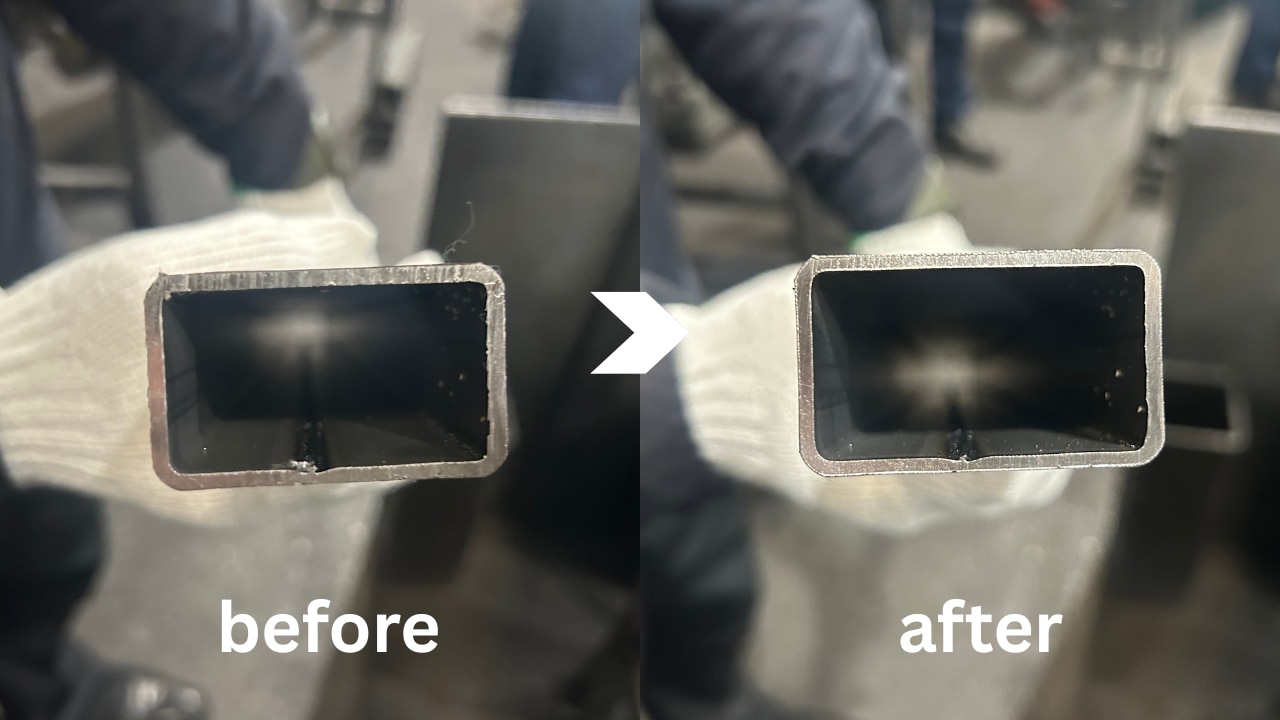
Problems caused by burrs
Burrs can cause serious problems at various stages, from the manufacturing site to the final product's use.
We will explain four specific problems and their impact.
- Product quality and precision decline
- Failure due to burr detachment
- Injuries to workers and users
- Deterioration of assembly accuracy
01 | Product quality and precision decline |
If burrs remain on a product, they can directly negatively impact its quality and precision. For example, they can cause the product to fall outside the designed dimensional tolerances (the allowable range of dimensional error).
02 | Failure due to burr detachment |
Burrs left inside a product can cause unexpected problems or serious malfunctions during use. Even if they appear fine during manufacturing, burrs can detach and fall into the product due to vibration, temperature changes, and aging. If metal burrs fall into the inside of precision electronic equipment, there is a risk of short-circuiting the circuit. In addition, in devices with moving parts such as engines and motors, detached burrs can get caught in the moving parts, potentially causing wear and damage.
03 | Injuries to workers and users |
If sharp burrs remain on the edges of parts, they can cause cuts or punctures when assembly workers touch them. Furthermore, if burrs remain on the final product and it reaches the customer, there is a non-zero possibility that the person using the product could be injured.
04 | Deterioration of assembly accuracy |
If burrs remain on the joint surfaces of parts, they may not fit together accurately as designed, resulting in gaps or parts being fixed in a tilted position. This can reduce the airtightness and dustproof/waterproof performance of the product. Furthermore, poor assembly significantly affects the rigidity and durability of the final product.
Tips and challenges of manual deburring
In many manufacturing facilities, deburring is still done manually. This is especially true for companies that produce a wide variety of products in small quantities, as they do not have the mass production capacity to introduce automated machinery, and manual deburring is essential for products with complex shapes.
- Tips
- Tool selection and usage
- Appropriate force application and tool technique
- Order of operations
- assignment
- Increased labor costs and working hours
- Variation in quality among workers and reliance on individual expertise
- Deterioration of working environment and risk of industrial accidents
- Our clients are demanding stricter quality and delivery deadlines.
Estimated cost reduction through semi-automated deburring
When considering introducing a deburring machine, the most important factors are likely to be the concrete cost reduction effects and return on investment.
Here, we present an example of deburring 20,000 pipes (both sides) using a deburring machine (UNI-DEBURRING).
Estimate of working hours and labor costs
This estimate is based on a labor cost of 2,000 yen per hour.
Working time (per unit) | Working time (20,000 units) | Cost (estimated labor costs) | |
manual | 60 seconds | 333.3 hours | 666,600 yen |
Deburring machine | 4 seconds | 22.2 hours | 44,400 yen |
Deburring machine - manual operation | ▲311.1 hours | ¥622,200 reduction |
The above is just one example; the results will vary depending on labor costs, work volume, processing conditions, etc.
Even simply replacing a 60-second manual process with a 4-second machine-based one can lead to significant labor cost reductions. The fact that the effects of introducing a deburring machine are clearly visible in numerical terms is a major advantage when making capital investment decisions.
Example of projected annual cost reduction
• Savings per instance: Approximately 622,200 yen saved
• Frequency of implementation: Once a month (20,000 units)
622,200 yen x 12 months = approximately 7,466,400 yen in annual labor cost savings.
The more frequently deburring work is performed at a site, the greater the annual reduction in costs will be.
Guideline for capital investment recovery
If the deburring machine itself has a list price of 1,800,000 yen, the following return on investment can be expected:
• Cost savings per instance: Approximately 622,200 yen
1,800,000 yen ÷ 622,200 yen ≈ 2.9 times
In other words, the equipment cost can be recovered with approximately 3 deburring operations. If operated once a month, Investment recovered in approximately 3 months This is a possible calculation.
Net profit after investment recovery
In subsequent deburring operations, starting from the fourth time after the equipment costs have been recovered, only cost savings accumulate without any additional investment.
- From the 4th time onwards: Approximately 622,200 yen per session becomes a direct profit.
- If operated once a month: Net profit effect of approximately 7,466,400 yen per year.
The deburring machine (UNI-DEBURRING) is a piece of equipment that increases profits the more it is used, contributing to long-term cost improvement and increased profitability.
Customer testimonials about introducing deburring machines
We interviewed customers who have actually implemented the UNI-DEBURRING deburring machine.
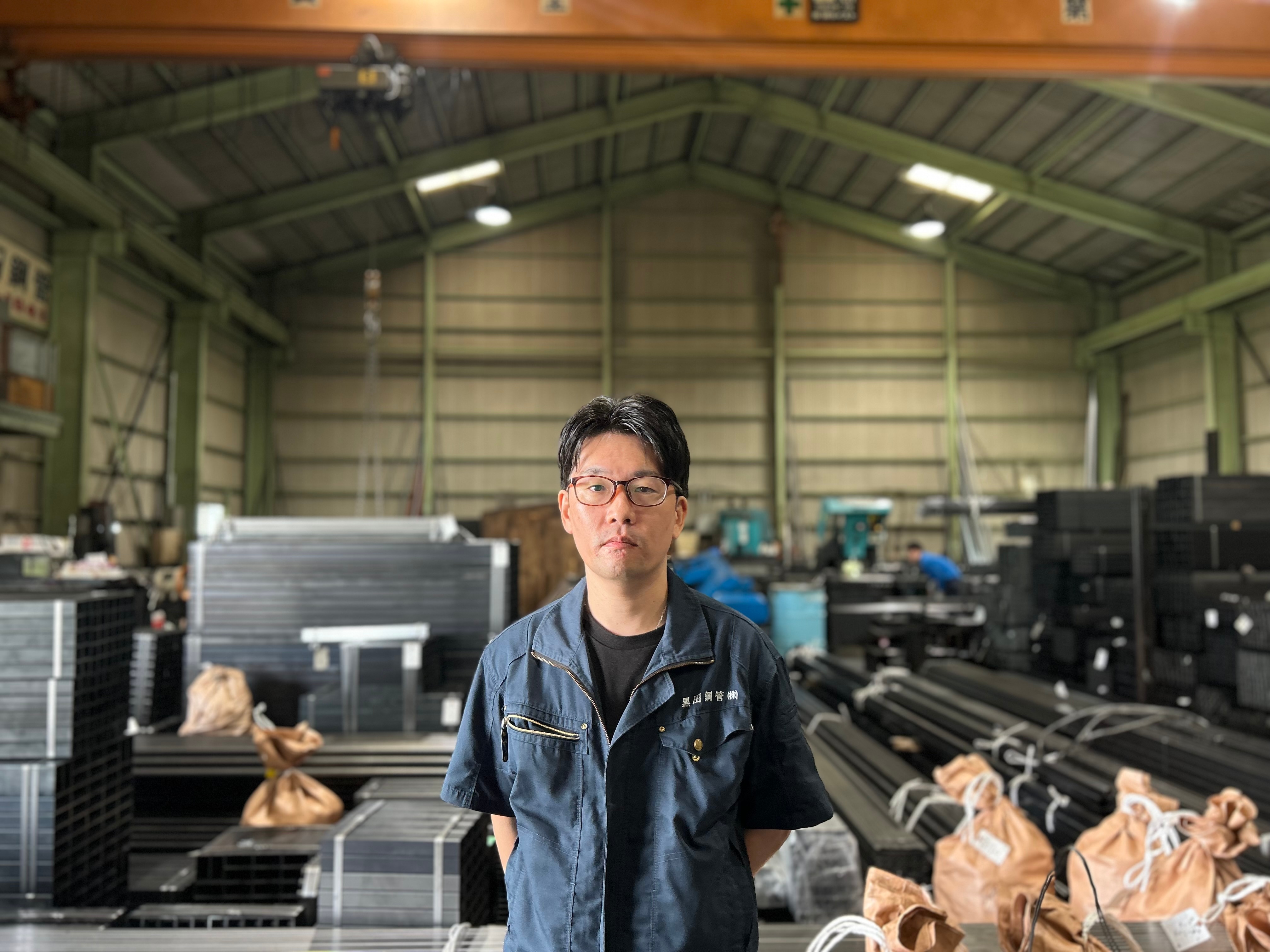
Kuroda Steel Pipe Co., Ltd.
134 Kawanobe, Chihayaakasaka-mura, Minamikawachi-gun, Osaka 585-0045, Japan
UNI-DEBURRING was implemented to achieve both quality and productivity.
Customers are experiencing benefits beyond just reduced working hours and costs.
summary
Semi-automating deburring processes offers more than just cost savings.
- Reducing the physical burden on workers
- Elimination of reliance on individual expertise
- Reducing overtime through increased productivity
This directly contributes to promoting work style reforms. In the manufacturing industry, where labor shortages are becoming increasingly severe, improving work efficiency through semi-automation will become an increasingly important topic as a realistic solution that can be easily implemented on the factory floor.