Basic Knowledge of tipped saw blade Sharpening | Explanation of resharpening Timing and Inspection Process
For those using tipped saw blade on site, you may sometimes struggle with issues caused by reduced sharpness. cutting If speed slows down, productivity declines, and roughness or burrs on processing surfaces can harm product quality. Moreover, frequent blade changes are a significant burden in terms of both time and cost.
This article explains why tipped saw blade need sharpening, when resharpening, and the resharpening process and methods used by professional companies. It also covers maintenance methods for ensuring long-term, safe use of tipped saw blade, and criteria for deciding resharpening or replace them with new ones.
▼Click here for more information on tipped saw blade structure and selection methods.
[Related Article] What is tipped saw blade? Explanation of safe Cutting parameter and how to choose a blade.
Table of contents [hidden]
- 1.Why is sharpening of tipped saw blade necessary?
- 1.1.Risks of continuing to use a dull blade
- 1.2.What are the signs of polishing?
- 1.3.resharpening or buying new? | Comparing costs and performance
- 1.4.The limitations of sharpening your own tipped saw blade
- 2.The entire process of resharpening tipped saw blade.
- 3.Summary
Why is it necessary to sharpen tipped saw blade?
Regular sharpening is essential for the efficient and economical operation of tipped saw blade. Maintaining the original performance of tipped saw blade leads to long-term cost reductions and increased productivity.
The risks of continuing to use a dull blade
Risk 1: Decline in Machining Quality
tipped saw blade When the sharpness of the tool decreases cutting, resistance increases, cutting and burrs or rough edges appear on the surface. Furthermore, increased frictional heat cutting can cause the surface to discolor side-welding or lose dimensional accuracy due to the heat-affected zone.
Risk ② Deterioration of production efficiency
A dull tipped saw blade will take longer to cutting. Even for the same amount of work, it will take more time than before, slowing down the overall production process. Furthermore, if the quality of cutting surface is poor, reprocessing will be required more often, resulting in extra time and effort.
Risk ③ Damage to the machine
Increased cutting resistance places an excessive burden on the motor, shortening its lifespan or, in the worst case, causing it to malfunction. Furthermore, dull blades tend to produce more vibration, which can damage the machine's bearings and moving parts.
Risk ④: The risk of endangering worker safety.
A dull tipped saw blade is more likely to jam the material during cutting, increasing the probability of sudden kickback (the material bouncing back). Excessive force and vibration during cutting can quickly fatigue the worker, leading to decreased concentration and increasing the risk of other accidents.
What are the signs that it's been polished?
Visually observable signs
- The tip of the carbide tip is rounded.
- Tiny chips have occurred.
- The blade tip reflects light like a mirror.
- The circuit board (base metal) shows bluish-black discoloration and rust due to frictional heat.
Signs you can recognize by your senses while working
- The blade does not advance easily.
- A high-pitched squealing noise occurs during cutting.
- An abnormal vibration occurs, causing a rattling sensation.
- A distinctive, unpleasant odor like burning metal.
Signs that appear in the processing results
- cutting surface is rough.
- The burrs and burrs get worse.
- cutting line does not proceed in a straight line but meanders.
resharpening or buy a new one? | Comparing costs and performance.
When managing tipped saw blade, it's important to consider not only the purchase price but also the cost per cutting and the lifecycle cost.
item | resharpening | Purchased new |
Initial cost | ◎ Cheap | △ High |
cutting performance | ○ Can be restored to near-new performance. | ◎ Best performance |
Stability of cutting quality | ○ Depends on polishing quality | ◎ Stability |
deadline | △ Polishing period required | ○ Available immediately if in stock |
Reusable | ◎ Possible several times | △ Purchase each time |
Long-term costs | ◎ Easy to reduce | △ Likely to increase |
Environmental load | ◎ Reduce waste | △ Waste generated |
The more expensive tipped saw blade, the greater the cost savings from resharpening, and with proper maintenance, the number of times you need to buy new blades can be significantly reduced.
On the other hand, if there are large cracks in the circuit board, numerous missing chips, or excessive burning or deformation, we may recommend replacing it with a new one.
Developing an optimal management plan based on the types of tipped saw blade used and their frequency of use within your company will lead to long-term cost reductions and stable production.
If you're considering purchasing a new item, please check the product details here first!
The limitations of sharpening your own tipped saw blade
While some users perform in-house sharpening of metal saw blade, which can be completed with a single sharpening machine, precise sharpening of metal-cutting tipped saw blade requires at least 5-6 processing machines, resulting in very high equipment investment. Therefore, it is often difficult for companies to acquire the necessary equipment and personnel in-house. Attempting to sharpen blades in-house without proper preparation can shorten blade life and unnecessarily risk both the machinery and the workers. To ensure quality and safety in metal cutting, it is wise to entrust the process to a specialist.
The entire process of resharpening tipped saw blade.
If you're considering resharpening tipped saw blade, you're probably wondering which company can provide a high-quality finish. Here, we'll introduce the entire process of tipped saw blade regrinding performed by a reliable regrinding company.
01 | In-stock item and blade tip check |
02 | Waist alignment and distortion correction |
03 | Brazing of the tip |
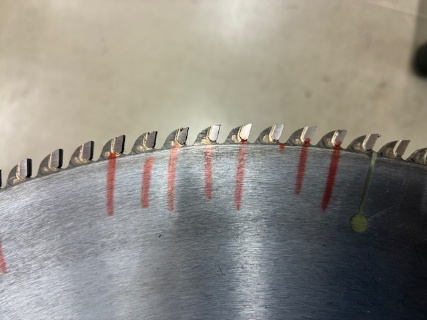
Blade tip check
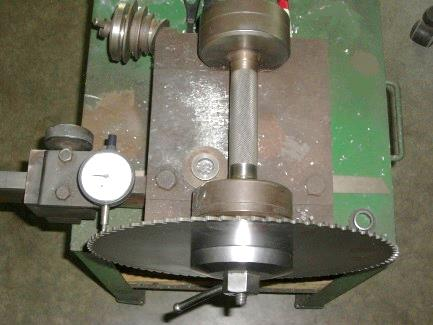
Distortion correction
04 | Polishing of the scrape surface |
05 | Sharpening of the sides and cutting edge |
06 | Final inspection |
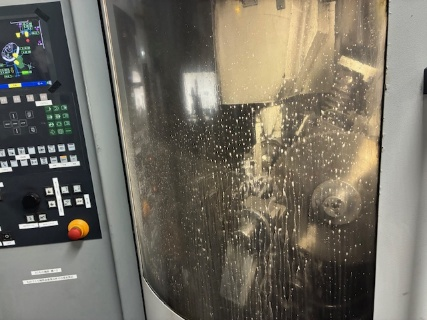
Blade sharpening
summary
Professional polishing of tipped saw blade is not just about restoring sharpness. By precisely adjusting the uniformity and rotational balance of the cutting edge and processing with optimal polishing volume, we maximize the lifespan of expensive tipped saw blade. Additionally, chip chips and distortions on the circuit board (metal metal) that occur during use are repaired, aiming to restore cutting performance close to new.
Sharpening metal cutting tipped saw blade, in particular, differs from sharpening metal saw blade in that it requires specialized equipment for each process, such as distortion correction, rake face grinding, side grinding, and edge grinding. To perform high-quality resharpening, it is necessary to have at least 5 to 6 specialized processing machines, and the investment in such equipment is extremely high.
Therefore, rather than building an in-house sharpening system, entrusting the work to a specialized company leads to more stable quality and extended tool life, ultimately resulting in a reduction in total costs. tipped saw blade resharpening is not merely maintenance; it's an important aspect of equipment management for maintaining cutting quality, improving productivity, and reducing costs. By resharpening at the appropriate time, you can maximize the performance of tipped saw blade and ensure stable production.
If you're having trouble with polishing, click here!
Please include "Regarding polishing" in your inquiry.
【author】

[Supervising Company]
Hashimoto Special Industries Co., Ltd.
Founded in 1953, this company is a specialized manufacturer tipped saw blade headquartered in Takamatsu City, Kagawa Prefecture. They manufacture, sell, and resharpening circular tipped saw blade for a wide range of materials, including wood, resin, non-ferrous metals, and steel. Their strength lies in custom-made production tailored to the customer's Cutting parameter, high rotational stability achieved through their unique tensioning process, and integrated service from manufacturing to resharpening and repair. They have a track record of supplying to diverse industries, including automotive parts and building materials.
For more details,Hashimoto Industries Co., Ltd. Official WebsitePlease take a look.