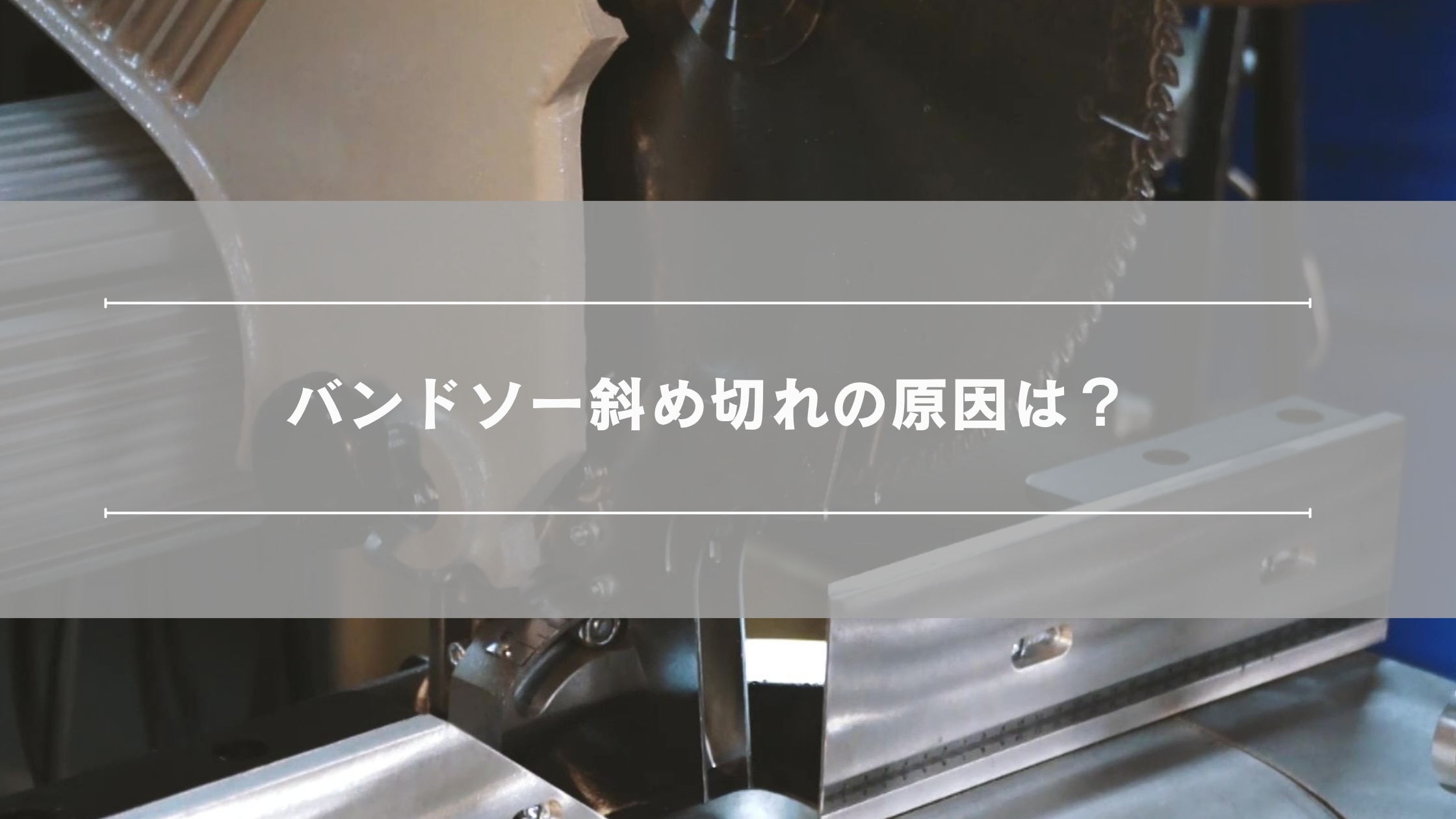
What causes metal cutting band saws to cut at an angle? We explain how to check for and address crooked cuts.
In metalworking, "bent cuts" (angled cuts) can occur when cutting materials with a band saw. When cutting surface is angled, it can affect processing quality and work efficiency, as it may require additional processing or rework in subsequent processes, or increase the amount of material that needs to be removed.
So why do band saws sometimes fail to cut straight? This article will explain the main causes of crooked cuts in stationary band saws used for cutting metal materials, points to check on-site, and specific countermeasures.
Table of contents [hidden]
- 1.Are you experiencing symptoms like this diagonal tear?
- 1.1.The entire cutting surface is tilted from side to side.
- 1.2.cutting surface is curved or dish-shaped.
- 1.3.The direction and angle of the tilt change each time you cut.
- 2.Five reasons why a band saw cuts at an angle or not straight.
- 2.1.Cause 1: The saw blade is worn or damaged.
- 2.2.Cause 2: The saw blade pitch or blade shape does not match the material.
- 2.3.Cause 3: There is a problem with the saw blade tension or guide.
- 2.4.Cause 4: Inappropriate Cutting parameter or improper material securing.
- 2.5.Cause 5: There are problems with the precision of the machine body or its parts.
- 3.Adjustment and countermeasures to eliminate slanted cutting with a band saw.
- 3.1.Review the saw blade.
- 3.2.Inspect each part of the machine and request adjustments or repairs as necessary.
- 3.3.Set appropriate Cutting parameter.
- 3.4.Improve the method of securing (clamping) materials.
- 3.5.Break-in period for new saw blades
- 4.Safety precautions when inspecting and adjusting a band saw
- 5.Frequently Asked Questions (FAQ)
- 5.1.The blade is new, but it cuts at an angle. Why?
- 5.2.Cutting in bundles results in particularly severe crooked cuts.
- 6.Summary_
Are you experiencing symptoms like this, where the skin is cut at an angle?
Even though it's called a "diagonal cut," the possible causes and areas to check will differ depending on the condition and angle of cutting surface. To identify the cause, it's important to first check the condition of cutting surface and understand what symptoms are occurring.
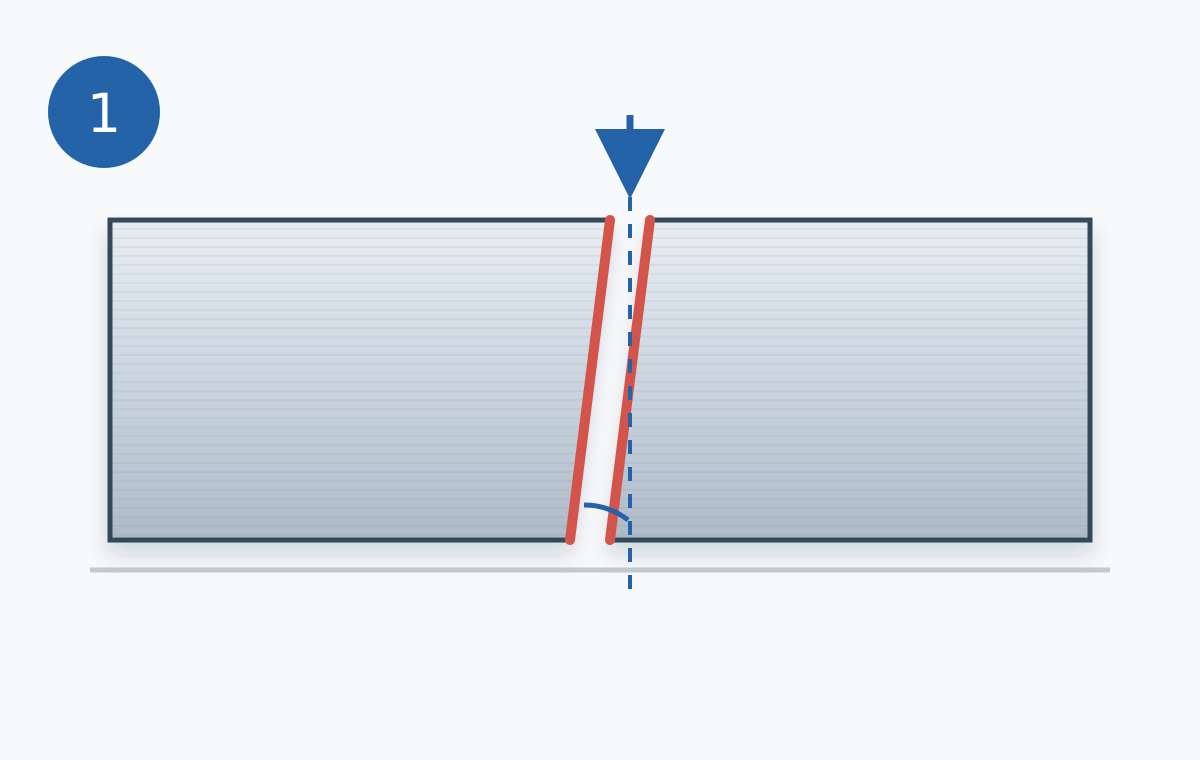
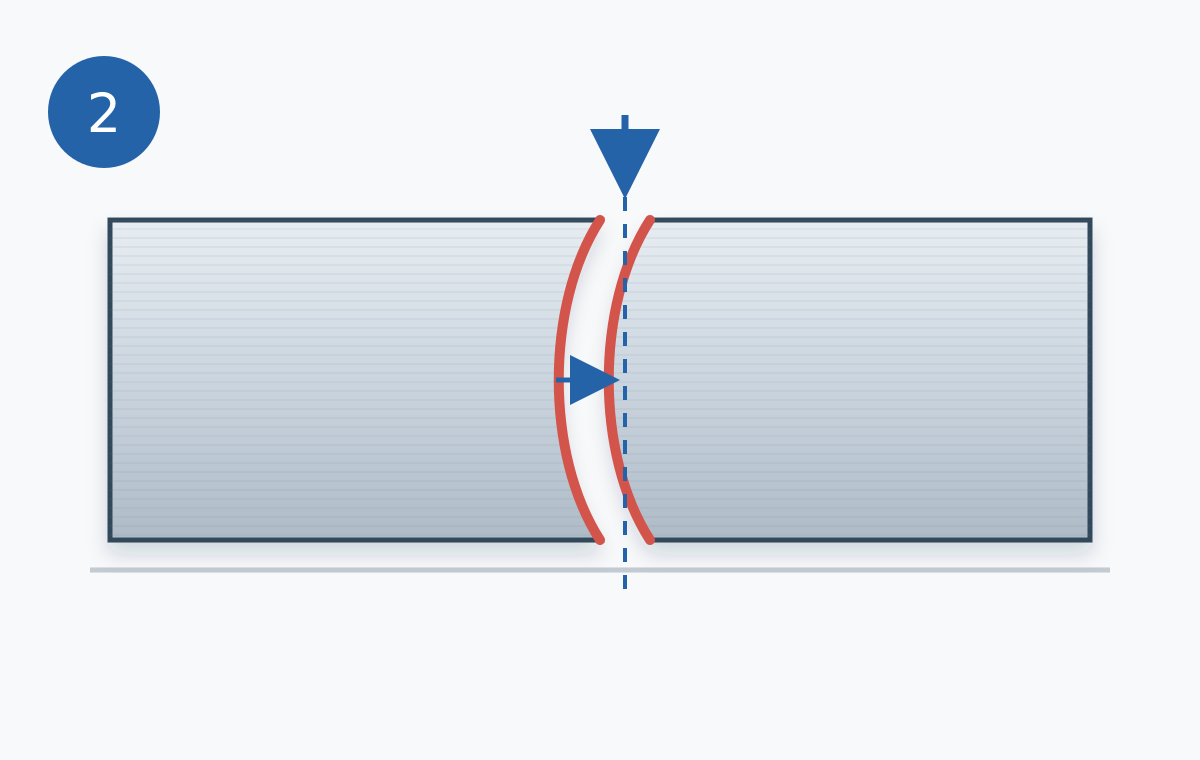
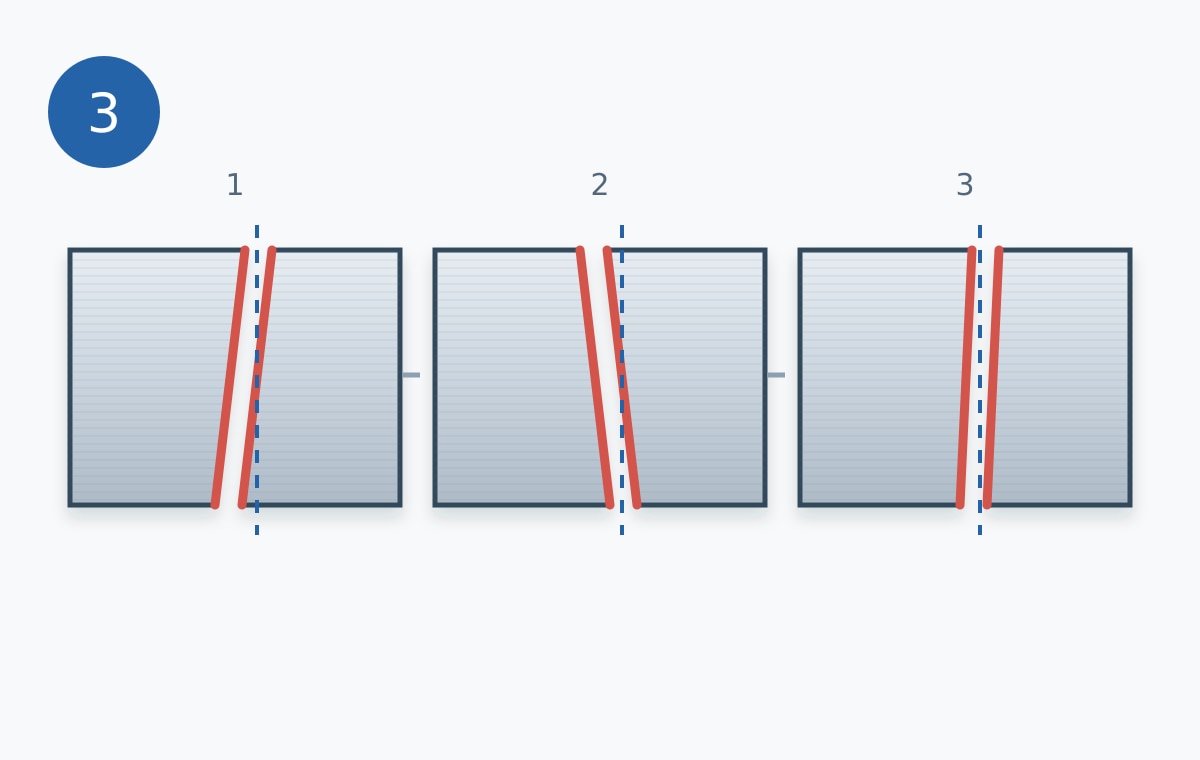
*The following diagrams ① to ③ schematically show cutting state.
The entire cutting surface is tilted from side to side.
This symptom involves the entire cutting surface being tilted at a constant angle from the start to the end of the cut.
Possible causes include uneven wear of the saw blade, improper adjustment of the perpendicularity and spacing of the saw blade guide, the perpendicularity between the saw blade and the vise/table, and the way the material is seated and secured.
cutting surface is curved or dish-shaped.
This symptom occurs when the saw blade slips from side to side during cutting, resulting in a curved or dish-shaped cutting surface.
Possible causes include insufficient tension, worn or improperly adjusted saw blade guides, uneven wear of the saw blade, an incorrect pitch for the material, or excessive feed.
The direction and angle of the tilt change each time you cut.
This symptom involves variations in the direction and angle of bending with each cutting.
Possible causes include improper material securing, wear or looseness in the saw blade guide, damage or uneven wear of the saw blade, and chips getting stuck in the vise or table.
5 reasons why a band saw cuts at an angle or not straight.
There are several underlying reasons why a band saw might not cut straight, ranging from the lifespan of consumables to improper settings and wear and tear on the machine's structure. Here, we'll delve into five of the most common causes.
Cause 1: The saw blade is worn or damaged.
One of the main causes is the lifespan of the saw blade and partial damage. If only one side of the blade edge wears out quickly while cutting metal, the cutting resistance becomes uneven, causing the blade to move toward less resistance and cut diagonally. Also, if you hear periodic "click, click" sounds during the cutting, it may indicate chipping or damage to the saw blade. Check the condition of the saw blade and replace it if abnormalities are found.
Reason 2: The saw blade pitch or blade shape does not match the material.
If the pitch (number of ridges) of the saw blade is inappropriate for the shape, hardness, and thickness of the material to be cutting, the blade will be under stress. Especially when cutting structural materials such as angle steel or pipes, if the pitch is too fine, chips can get stuck in the tooth grooves, causing heat generation and breakage. On the other hand, if the pitch is too coarse, the number of blades applied to the material decreases, increasing the load on the cutting edge and leading to chipping or bending. For pipes and shaped steel, it is especially important to select a pitch and blade profile that matches the thickness and cross-sectional shape.
Cause 3: There is a problem with the saw blade tension or guide.
If the tension on the saw blade is too loose (insufficient tension), the blade will flex when it hits the material, making it impossible to maintain a straight line. Also, if the saw blade guide, which suppresses blade wobble and maintains perpendicularity, is worn, it will induce a slanted cut.
Cause 4: Inappropriate Cutting parameter or improper material securing.
If the cutting speed (saw blade cutting speed) and feed do not match the material or saw blade, it can cause bending and wear of the saw blade, resulting in bending or chipping. Especially if the feed is too large, the saw blade can lose to cutting resistance and lose its straightness. Also, if material fixation is insufficient, it can move during cutting, causing diagonal breaks.
Cause 5: There are problems with the precision or parts of the machine itself.
Misalignment or wear of the band wheel, play in the bearings, and wear or improper adjustment of the saw blade guide can make the saw blade's movement unstable and cause it to cut crookedly. In addition, wear or malfunction of the vise, table, or material support may prevent the material from being fixed in the correct position.
Adjustment and countermeasures to eliminate slanted cutting with a band saw.
Once the cause is identified, check the condition of the affected area and replace parts or adjust the components as needed. Band saw blade bending can be caused by multiple factors, including not only the saw blade itself, but also the material's mounting condition, the guides, and the adjustment of various machine components. Here, we will explain the areas to check for each cause and specific countermeasures.
*Inspection, adjustment, and saw blade replacement must always be performed with the main power off and the saw blade completely stopped, following the instructions in the machine manufacturer's manual.
Reviewing saw blades
First, we check the condition of the saw blade. We look for wear, chipping, and uneven wear of the teeth, and replace it if any abnormalities are found.
The width, thickness, and length of the saw blade should follow the machine's specifications. Then, the pitch, blade type, and saw blade material should be selected to match the material and cross-sectional shape. For difficult-to-cut materials, bimetal blades using cobalt high-speed steel are suitable. The mounting direction and condition of the saw blade should also be checked.
Inspect each part of the machine and request adjustments or repairs as needed.
Around the guide, check for wear, looseness, position, and spacing of the saw blade guide. Confirm that the blade can be guided properly and adjust or replace as necessary. Also, check that the saw blade tension is set to the specified value and that there are no abnormalities in the rotation of the band wheel or the movement of the saw blade. If there are any abnormalities, consult the manufacturer or dealer.
The tip brush should be checked for wear, position, and contact with the saw blade, and adjusted or replaced as needed.
Set appropriate Cutting parameter.
Cutting speed (saw blade cutting speed) and feed should be set according to the material, dimensions, cross-sectional shape of the material, blade used, and machine specifications. If the feed is too high, the saw blade may bend, causing bending or chipping. Also, if the cutting speed is not appropriate, it may accelerate edge wear.
For machines that use coolant, please check the concentration, supply volume, nozzle position, and the presence of contaminants or chips, according to the specifications of the machine manufacturer and saw blade manufacturer.
Improve the method of securing (clamping) materials.
Check that the vise jaws are not worn and securely fasten the material without any gaps. When cutting long workpieces, always use an auxiliary work stand to ensure that it is perfectly horizontal to the band saw table surface to prevent the material from sagging and entering at an angle due to its own weight.
Furthermore, when cutting irregularly shaped materials or angle materials, specialized supports or simple clamping jigs are used to evenly distribute the fixing force.
Break-in period for a new saw blade
When using a new saw blade, a break-in period is necessary. Gradually breaking in the blade under appropriate conditions helps to maximize its performance and extend its lifespan.
The break-in cutting procedure should follow these steps as a basis. (Recommended by Honsberg)
- Start with a cutting speed of 70% of normal and feed rate of around 50%.
- Cumulative cutting until the area reaches 300~500cm², or pipes and shaped steel are cutting for about 15 minutes, then gradually return cutting conditions to recommended values.
- For carbide saw blades, break-in cutting is performed until the cumulative cutting area reaches 1,500~2,000 cm², after which the cutting conditions are returned to the recommended value.
Safety precautions when inspecting and adjusting a band saw
When inspecting, adjusting, or replacing saw blades on a band saw, please pay attention to the following points to prevent unexpected accidents.
- Adjustments and replacements of guides, saw blades, etc., should be performed according to the machine manufacturer's instruction manual.
- Always turn off the main power before performing any inspection or adjustments.
- Make sure the saw blade has come to a complete stop before starting work.
- When changing saw blades, wear appropriate protective gear such as gloves.
▼Click here for detailed information on how to safely use a band saw cutting machine▼
[Related Article]What is a band cutting? A professional explains everything from the basics of metal cutting to safe usage.
Frequently Asked Questions (FAQ)
Q.
My new blade cuts at an angle. Why is that?
A.
If a new blade cuts at an angle from the very first cutting, it could be because the perpendicularity of the guide supporting the blade is incorrect, or because sufficient tension was not ensured during installation. Alternatively, it's possible that excessive force was applied during the first cutting without proper break-in, resulting in premature damage to the blade tip and uneven wear.
Q.
Cutting them in bundles results in particularly bad crooked cuts.
A.
Bundle cutting, where multiple pipes or round rods are stacked and cutting at once, creates tiny gaps between each material, making it easier for the material to rotate or slide sideways within the cutting. This movement imposes irregular lateral loads on the blade, inducing diagonal cutting. It is important to use a strong dedicated clamp for bundling or to firmly fix the materials together. Additionally, cutting conditions should be adjusted based on the manufacturer's recommended values according to the total cross-sectional area of the material and the saw blade used.
summary
Diagonal cuts in band saws can be caused by various factors, including saw blade wear and selection, tension, load, and sawing speed.
First, check the condition of the saw blade, guide, and tension, and review whether Cutting parameter are appropriate for the material. If the problem persists even after making adjustments or replacing parts, the issue may lie in the machine itself or the drive system, so we recommend consulting the manufacturer or dealer.
Regularly checking the condition of each part and addressing any abnormalities promptly is crucial for maintaining cutting accuracy.
If you have any problems with band saw cutting, please feel free to contact us.
We will check the intended use, materials, and current cutting conditions, and then guide you to the most suitable method.
If you would like to check the specifications, processing capacity, and compatible materials of the band saw cutting machine in detail,
Please refer to our product catalog. You can find a summary of the features and specifications of each product.