What is pressure testing for high-pressure gas cylinder? Comparing water-tank and non-water-tank methods
Table of contents [hidden]
- 1.Re-inspection cylinder
- 1.1.Containercylinder-inspection process
- 1.2.cylinder filling expiry date
- 2.Outlineof pressure test
- 3.Summary
cylinder re-inspection
High-pressure gas cylinder are inspected at legally prescribed intervals to determine whether cylinder are safe to use. This inspection is called cylinder re-inspection.
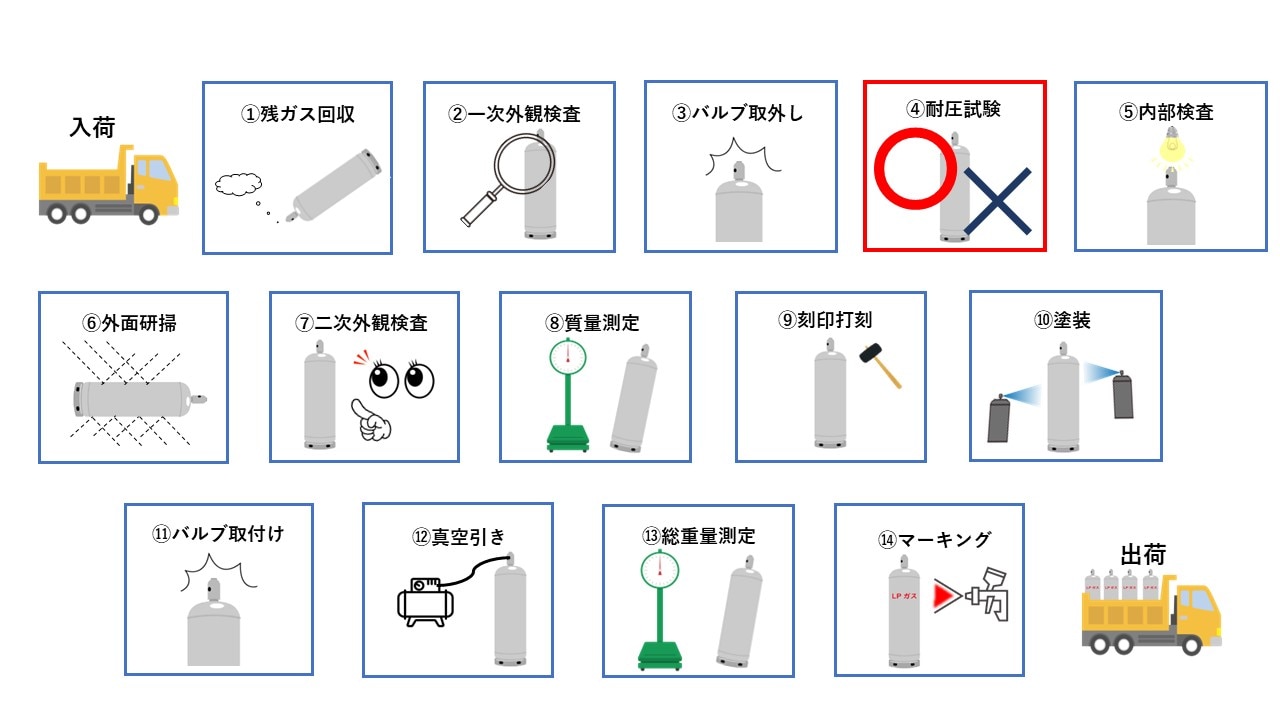
cylinder re-inspection process
cylinder fill date
The expiration date for cylinder is regulated in detail depending on the size, type, and year of manufacture of cylinder.
Here we have summarized the fill-by date cycles for cylinder manufactured after April 1989 (representative cylinder only).
Manufactured less than 20 years ago | 20 years after manufacture | remarks | |
General high-pressure cylinder (oxygen, nitrogen, carbon dioxide, etc.) | 5 years | No changes | |
FRP cylinder (5-year inspection) | 5 years | Discard | Discarded 20 years after manufacture |
FRP cylinder (3-year inspection) | 3 years | Discard | Discarded 15 years after manufacture |
lpg cylinder (cylinder 20kg or more) | 5 years | 2 years | |
lpg cylinder (cylinder 10kg or less) | 6 years | 2 years |
Pressure Test Overview
The pressure test consists of four steps: filling with water → applying pressure (welding force) → draining → drying.
There are two types of test methods.
① Water tank method: cylinder is submerged in a water tank (a cylindrical tank), and the amount of expansion of cylinder is measured by the amount of water that overflows from the water tank.
Measure.
② Non-tank type: welding force and pour water into cylinder full of water, and use a formula to calculate how much cylinder has expanded from the amount of water.
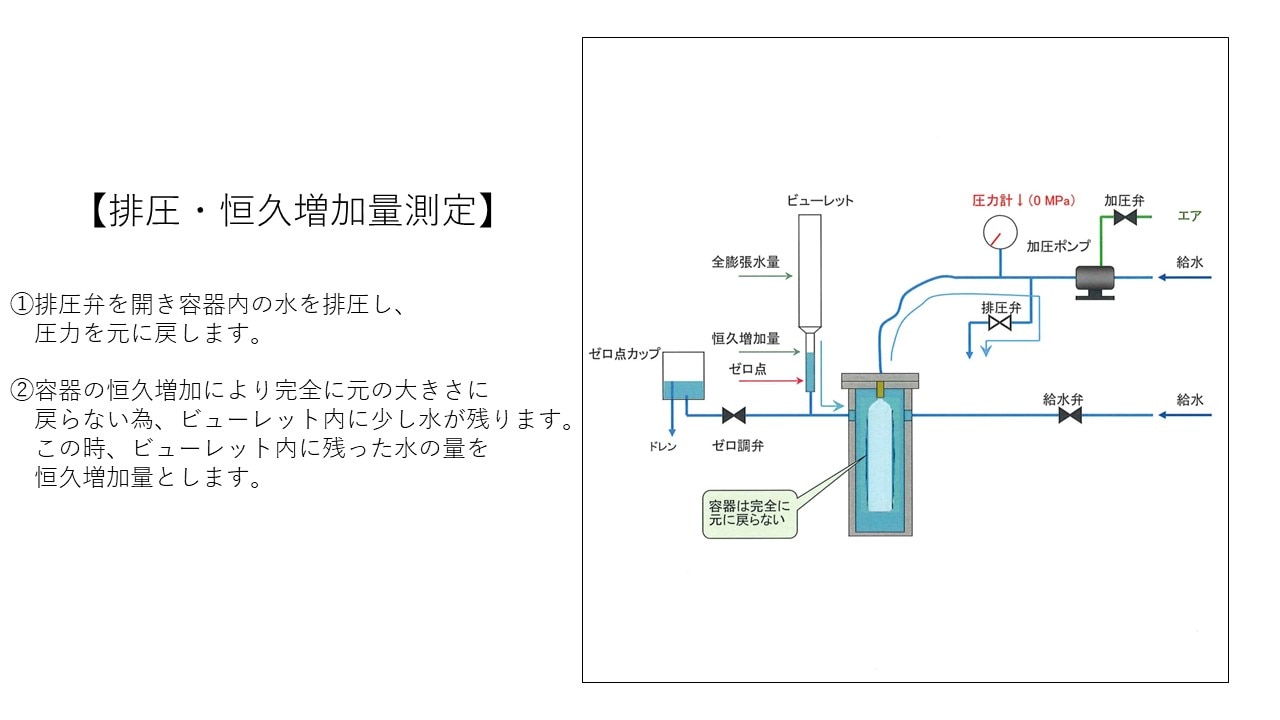
The testing process and principles are the same for both the water tank and non-water tank methods. Pressure is applied to the inside of cylinder, and the "total increase in the amount of expansion of cylinder" is measured. The pressure is then released, and cylinder returns to its original expansion. However, once cylinder has expanded, it will not return completely to its original state. This remaining expansion is called the "permanent increase."
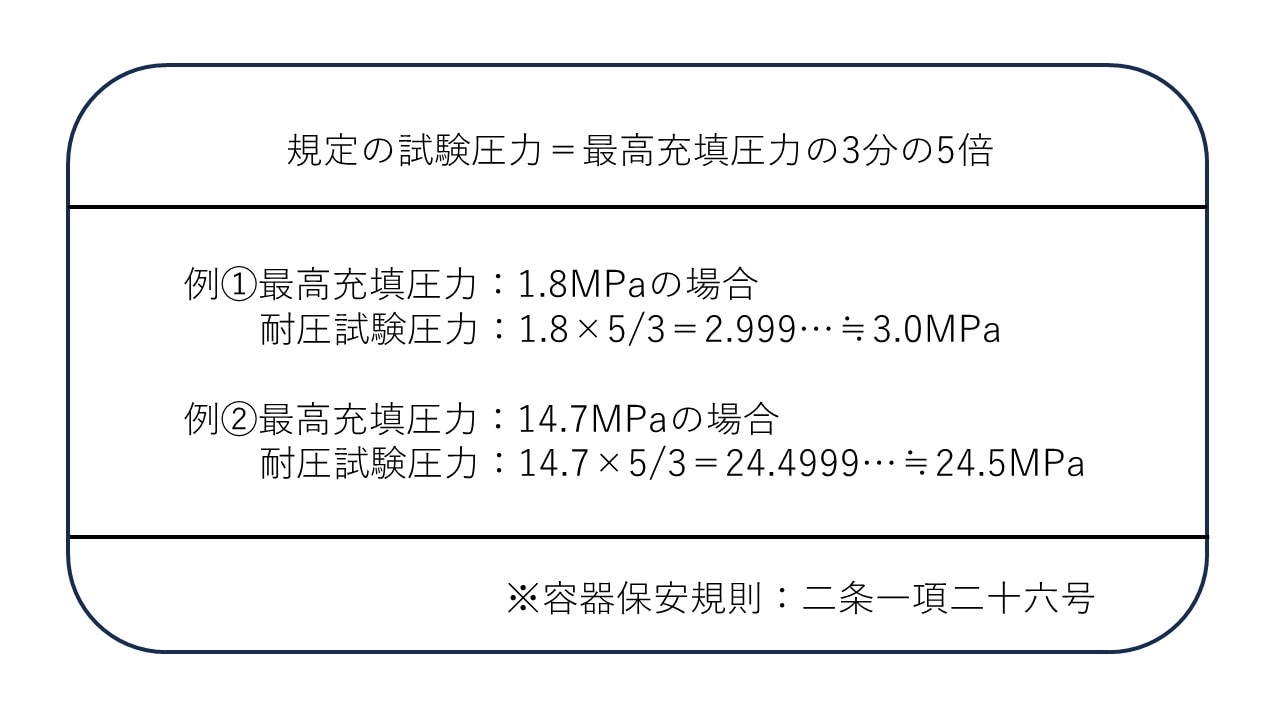
"Permanent increase amount / total increase amount x 100 = permanent increase rate (%)", and cylinder with this rate of 10% or less (5% for FRP cylinder) can be used safely.
About the water bottle pressure test
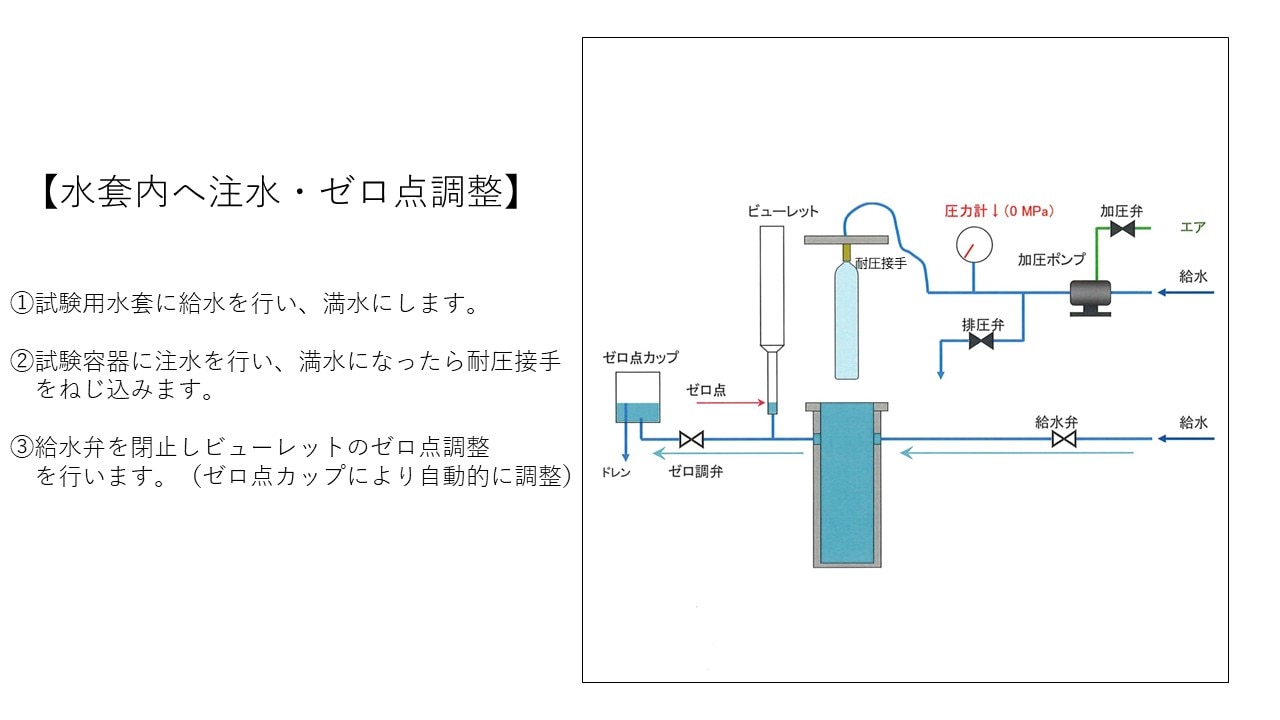
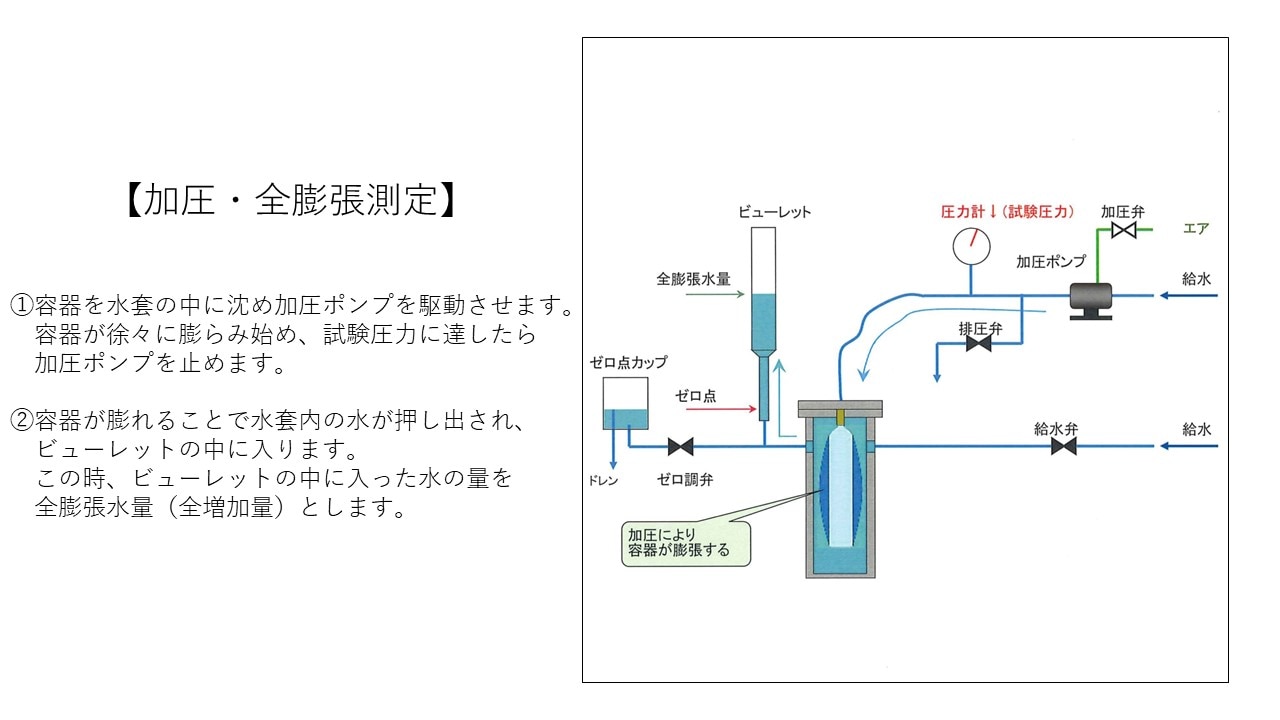
The water jacket method involves submerging cylinder in a water jacket filled with water welding force. A burette is used to measure the amount of water that overflows the water jacket when the pressure welding force to the specified level, and the amount of water that returns to the water jacket when the pressure is released.
Total increase = the amount of water that overflowed from the bucket and flowed into the burette
Permanent increase = the amount of water remaining in the burette when cylinder cylinder does not return to its original state after draining the water from the container.
Flow of water-type pressure test
Advantages of water-filled pressure testing
- The measurement method is very simple and there is little error.
- Since there is little effect from air bubbles in cylinder, relatively accurate values can be measured even in small cylinder.
- It can also be used with acetylene cylinder cylinder cannot hold water inside.
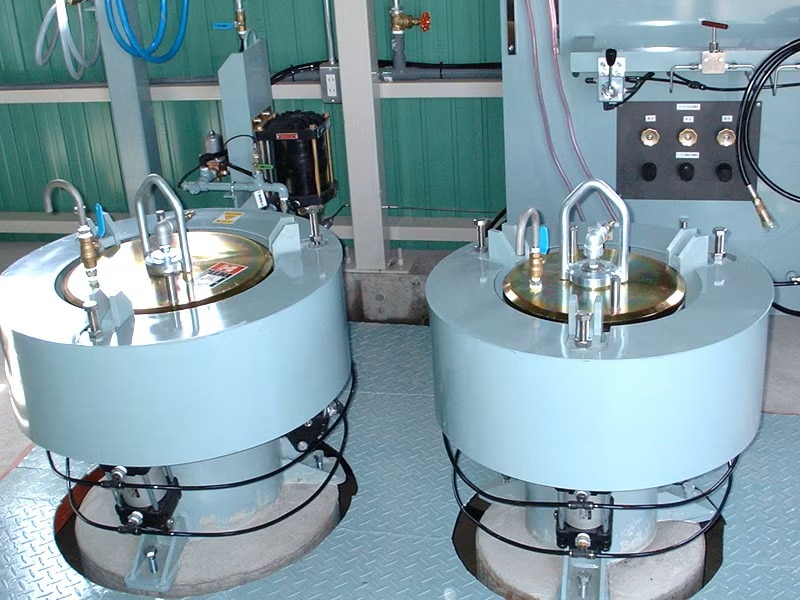
Water-type pressure test equipment
Non-tank pressure testing
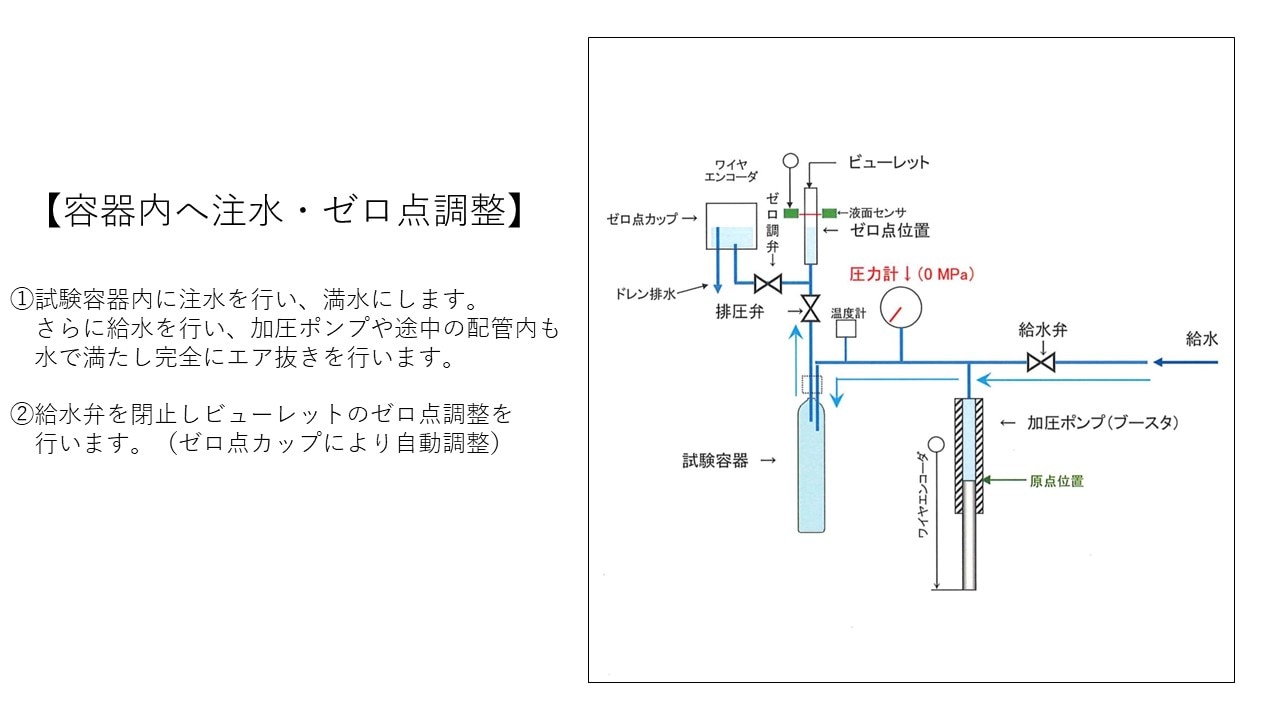
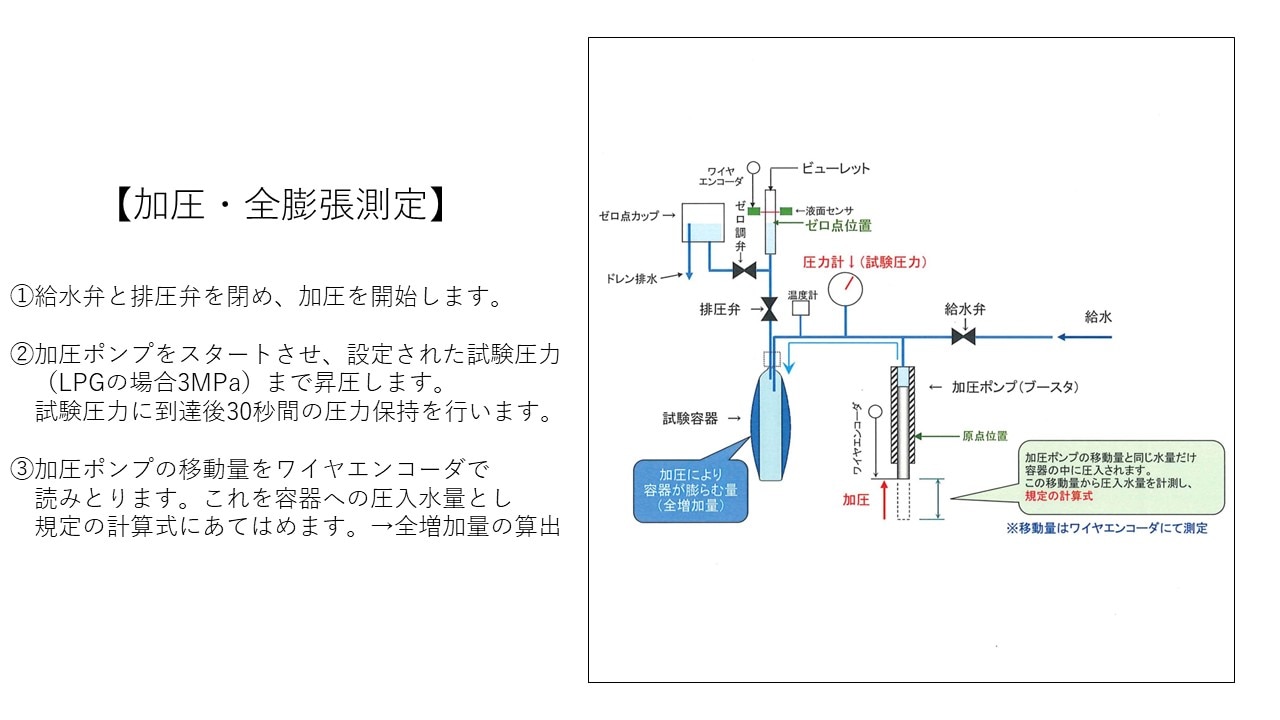
Without using a water jacket, water is pumped into cylinder until a specified pressure is reached. At this point, the amount of water that has entered is measured and the expansion rate of cylinder is calculated based on conditions such as the internal volume, pressure, and water temperature.
Total increase = Measure the amount of water in cylinder and apply the specified formula to calculate.
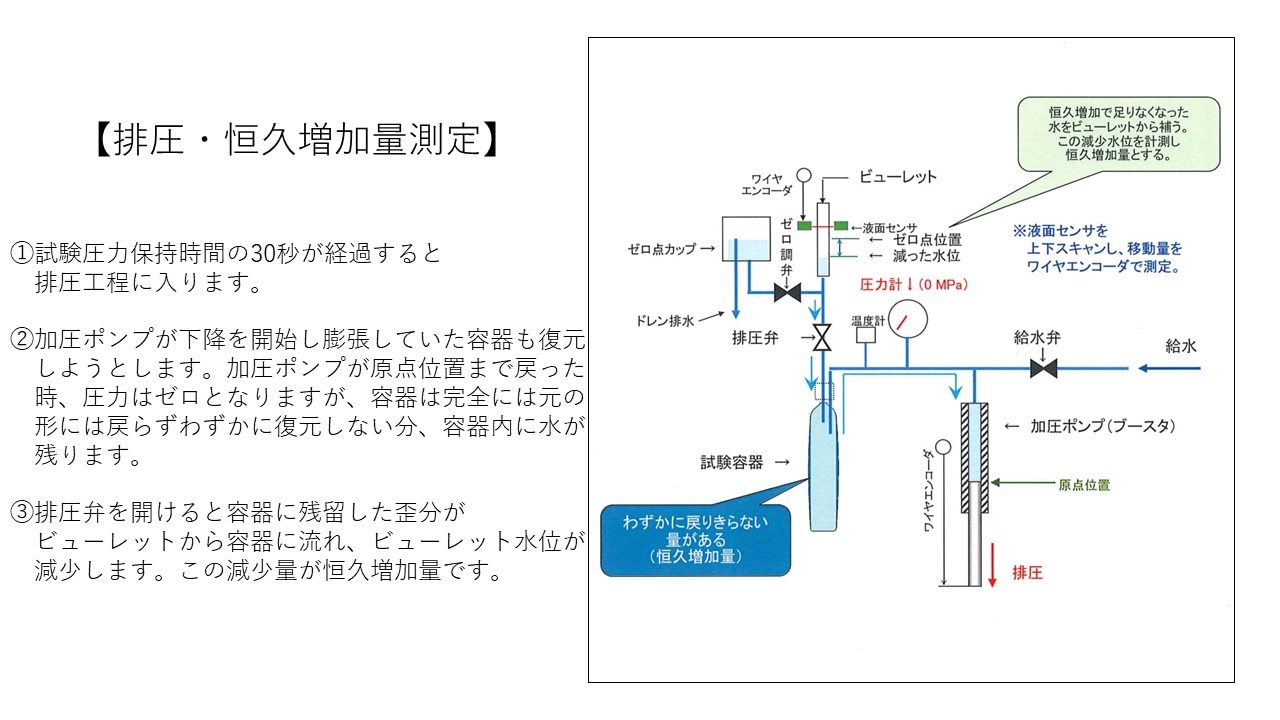
Permanent increase = the amount of expanded cylinder that does not return to its original size after pressure is released.
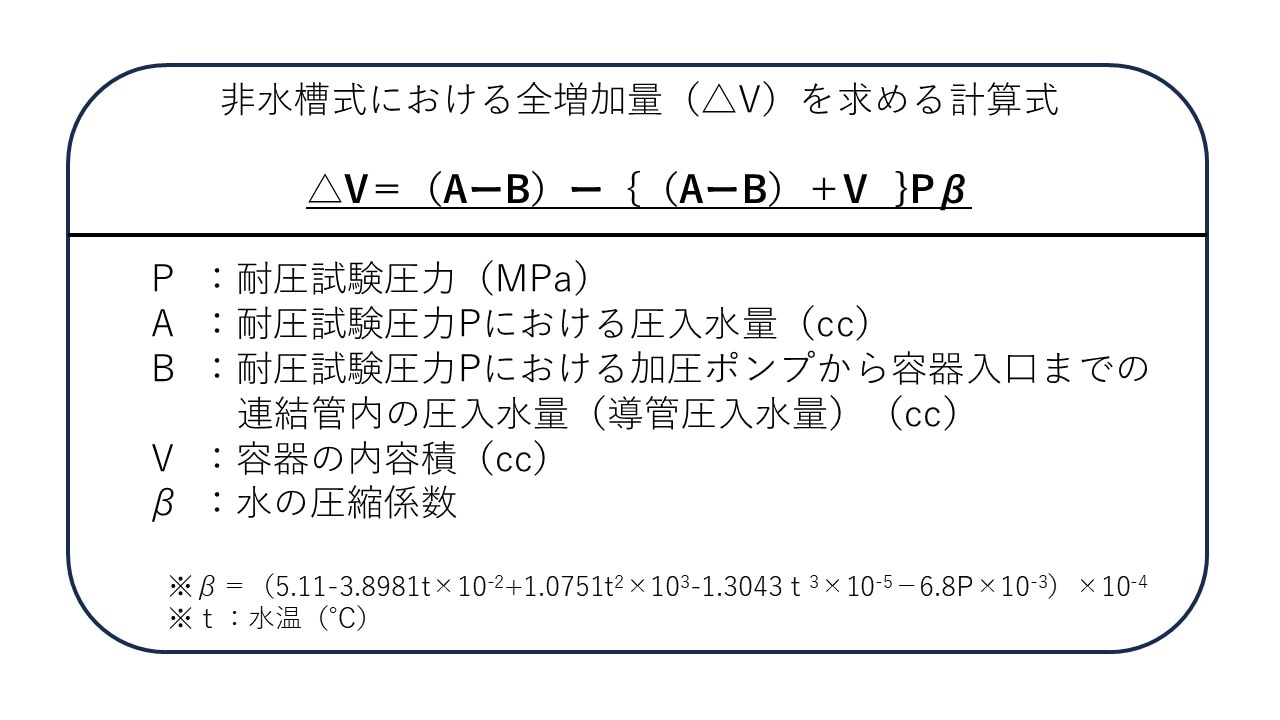
Our non-water tank type pressure test equipment automatically calculates the total increase, measures the permanent increase, calculates the permanent increase rate, opens and closes valves, operates welding force pump, adjusts the zero point, and performs a series of other operations.
Non-tank pressure test flow
Advantages of non-tank pressure testing
- The device has a simple structure, making maintenance easy.
- It is safe because there is no up and down movement such as putting cylinder into a water bottle.
- It can process more cylinder efficiently than the water bottle type.
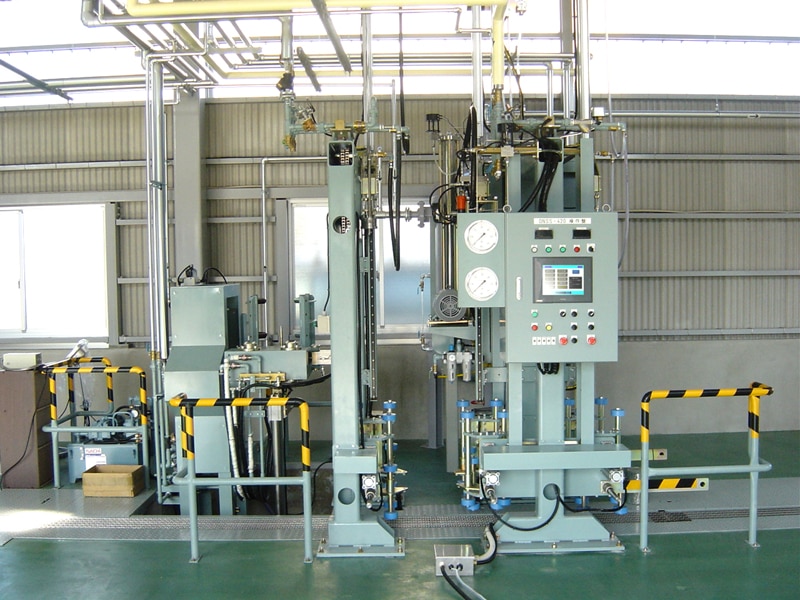
Fully automatic non-water tank pressure test equipment
summary
This article covered the following:
・About cylinder re-inspection
・ cylinder re-inspection process
・ cylinder filling expiration date
- Types of pressure testing (water tank type and non-water tank type)
Thank you for reading to the end.
For products related to pressure testing, please see the link below.